


























































Types of Door Locks: A Complete UK Guide
16 September 2026Choosing the right door lock depends on the door’s material, location and purpose. External doors require suitably specified security hardware, while bathrooms and bedrooms generally need privacy rather than protection against forced entry.
This guide compares the most common types of door locks used in UK homes and commercial buildings. You can also explore our complete collection of door locks and latches.
Door Lock Types Compared
Lock type | How it works | Common application | Primary Purpose | Suitable doors |
Mortice deadlock | A key or cylinder projects a solid bolt | Front doors, offices and storerooms | Key-operated security without a latch | Timber doors |
Mortice sash lock | A handle operates the latch; a key operates the deadbolt | External and lockable internal doors | Latching and key-operated locking in one case | Timber doors |
Bathroom lock | A handle operates the latch; a thumbturn engages the privacy bolt | Bathrooms and toilets | Privacy | Internal doors |
Night latch | Automatically latches when the door closes | Front and communal doors | Convenient automatic latching and controlled entry | Timber doors |
Rim lock | Surface-mounted case containing a latch, deadbolt or both | Period and thin timber doors | Surface-mounted latching, locking or both | Timber doors |
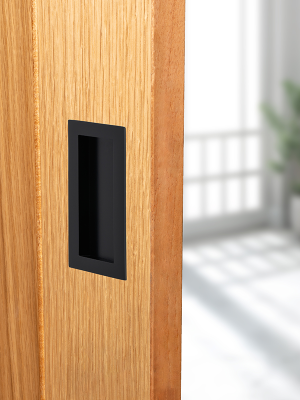
Sliding door lock | A hook bolt or privacy mechanism prevents sideways movement | Pocket, barn and sliding bathroom doors | Locking or privacy for a sliding door | Sliding doors |
Multipoint lock | One operation engages several locking points | Modern external doors | Securing a door at several points | uPVC, composite and aluminium doors |
DIN lock | A standardised-format mortice case may provide a latch, deadbolt, sash lock, bathroom lock or escape function | Commercial, high-traffic and modern residential projects | Consistent sizing and compatibility within a specified system | Usually timber doors |
These descriptions explain each lock’s primary purpose, not its security rating. Security depends on the individual product, cylinder where fitted, door, frame, keeps and quality of installation. A basic mortice sash lock, for example, should not be treated as equivalent to a tested, BS-rated security sash lock.
What Is the Difference Between a Lock and a Latch?
A latch holds a door closed but does not necessarily restrict access. It normally uses a spring-loaded bolt operated by a handle or knob.
A lock prevents the door from being opened without a key, thumbturn, code or another authorised method.
For example:
A deadlock contains a locking bolt but no latch.
A sash lock combines a latch and deadbolt.
A bathroom lock combines a latch with a privacy bolt.
A tubular latch closes a door but does not lock it.
Mortice Deadlocks
A mortice deadlock is fitted into a pocket cut into the door edge. The key or cylinder operates the lock mechanism, which then projects the deadbolt into the keep in the door frame.
Deadlocks are commonly fitted to timber front and back doors, offices and storerooms. Because they do not normally contain a latch, they may be installed alongside a night latch or another closing mechanism.
Check the case size, backset, door thickness, method of operation and required security standard before ordering.
Browse door deadlocks and deadbolt locks.
Mortice Sash Locks
A mortice sash lock combines a handle-operated latch with a key- or cylinder-operated deadbolt. The latch holds the door closed during normal use, while the deadbolt locks it.
Sash locks are used on external timber doors and lockable internal rooms. Their security level varies widely: the category includes basic internal locks as well as tested security sash locks.
The main difference between a sash lock and a deadlock is that a sash lock includes a latch. When replacing one, check the case depth, backset and centres between the handle spindle and keyhole or cylinder.
Explore our range of mortice sash locks.
What Do 3-Lever and 5-Lever Locks Mean?
Traditional key-operated mortice locks may be described by the number of levers inside the case. The key lifts these levers into the correct positions so that the deadbolt can move.
A 3-lever lock is generally intended for lower-security applications such as internal doors. A 5-lever lock offers more possible key combinations and is commonly used where greater security is required, including on external timber doors. However, the number of levers alone does not prove that a lock meets an insurance requirement.
For an external door, check whether the specific product is certified to the standard required by your insurer rather than relying only on a “5-lever” description.
BS 3621 and Insurance-Rated Locks
BS 3621 is a UK standard for thief-resistant locks that can be key-operated from both sides. Locks certified to the standard are commonly specified for external timber doors and are often recognisable by the BSI Kitemark and standard number on the faceplate or packaging.
A lock can have five levers without being certified to BS 3621, and cylinder-operated mortice locks can also be BS 3621-certified. Always check the exact product certification and the wording of your home insurance policy. Related standards may apply where a lock has keyless escape from the inside, so do not assume that BS 3621 is the correct requirement for every door or building.
Cylinder-Operated Locks
Some mortice and multipoint lock cases are operated by a separate cylinder rather than a traditional lever key. Common formats include euro-profile, oval-profile and rim cylinders. The cylinder is the part into which the key is inserted; it operates the lock case or multipoint mechanism.
Cylinder-operated systems make it easier to change the keying without replacing the complete lock mechanism. Depending on the cylinder and lock case, they can also support options such as thumbturn operation, keyed-alike sets or master-key systems.
Security depends on the complete combination of cylinder, lock case, security hardware and door. For an external door, choose products tested to the required standards and make sure a euro cylinder is the correct length: it should not project excessively beyond the protective door furniture.
Browse our range of door lock cylinders.
DIN Locks
DIN locks are mortice locks made to standardised European dimensions. The range includes latches, sash locks, deadlocks, bathroom locks, night latches and escape locks, often with euro-profile cylinder operation.
Their consistent case formats, backsets and centres can simplify specification across a project. DIN locks are widely used in commercial buildings, schools, offices, high-traffic areas and modern residential projects. They are available with different functions, finishes, faceplate shapes and test certifications, so “DIN” describes the format rather than a particular security level.
Check the exact backset, centres, case dimensions, faceplate and function against the door and compatible furniture before ordering.
Explore our extensive range of DIN locks and latches.
Bathroom Locks
Bathroom locks are intended for privacy rather than external security. A typical bathroom lock combines a handle-operated latch with a bolt controlled by an internal thumbturn.
The outside fitting may include an emergency release and an indicator showing whether the room is occupied. As well as a conventional mortice bathroom lock, privacy can be achieved using a turn and release with a suitable deadbolt or privacy-latch arrangement.
Check the case size, backset and handle-to-thumbturn centres. Make sure the turn and release is compatible with the selected lock or deadbolt. If the door is fire-rated, every item of hardware must be suitable for that particular doorset.
Browse bathroom and toilet door locks and turn and release sets.
Night Latches
A night latch is mounted on the inside face of a door and automatically engages when the door closes. It is normally operated by a key from outside and a knob or handle from inside.
Standard or basic night latches provide convenient automatic latching, but they should not automatically be treated as sufficient security for an external door. Some timber entrance doors use a basic night latch alongside a suitably specified mortice deadlock.
High-security night latches are separately tested and may include features such as a more substantial bolt, protection against manipulation and a reinforced keep. If a security or insurance standard is required, verify the certification of the specific model rather than relying on the term “night latch”.
Rim Locks
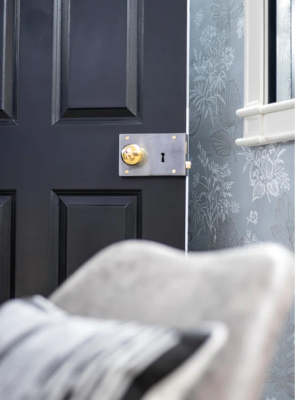
Rim locks are fitted to the door’s surface rather than recessed into its edge. They are commonly used on period doors, thin timber doors and traditional interiors.
A rim lock can contain a latch and key-operated deadbolt, while a rim latch usually provides simpler closure or privacy.
Decorative rim locks should not be relied upon as the sole security lock on an external door unless they are specifically tested for that purpose.
Browse rim locks and rim latches.
Sliding Door Locks
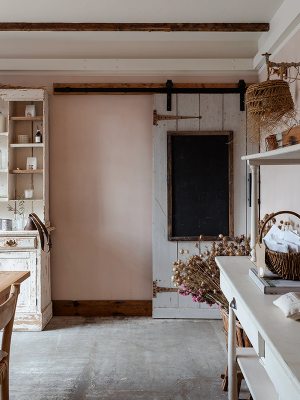
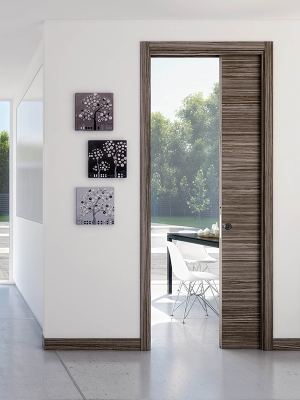
Sliding doors move sideways and often require a hook bolt or specialist privacy mechanism instead of a conventional straight latch.
Sliding door locks can be used on pocket doors, barn doors, bathrooms, bedrooms and internal room dividers. External sliding and patio doors require locking systems designed for their specific frames and tracks.
Check the door thickness, lock dimensions, clearance and included components before ordering.
Explore sliding door locks and barn door latches.
Multipoint Locks
A multipoint lock secures a door at several positions along its edge. Lifting the handle or turning the key can engage hooks, rollers and bolts within the frame.
These systems are commonly fitted to uPVC, composite and aluminium entrance doors.
When replacing a multipoint lock, check:
Backset
Handle-to-cylinder centres
Faceplate dimensions
Position of hooks, rollers and bolts
Manufacturer and gearbox markings
Similar-looking mechanisms are not always interchangeable.
Which Door Lock Should You Choose?
Timber front or back door: A suitably specified deadlock, sash lock or night latch.
uPVC or composite door: Usually a multipoint mechanism with a euro cylinder.
Internal passage door: Normally a latch rather than a lock.
Bathroom or toilet: A bathroom lock or privacy latch with an emergency release.
Bedroom or office: A sash lock, privacy lock or deadbolt.
Pocket or barn door: A specialist sliding door lock or latch.
Period door: A rim lock or latch may provide the most appropriate appearance.
For external doors, check the complete doorset and any requirements set by your insurer. A certified lock fitted poorly to a weak door will not provide effective protection.
How Do I Identify and Measure an Existing Door Lock?
Before removing the lock, note how the door and lock operate. Check whether it is a deadlock, sash lock, bathroom lock, night latch or multipoint mechanism, and whether it uses a traditional key, cylinder or thumbturn. Look for a manufacturer’s name, logo, product code, standard number or Kitemark on the faceplate, lock case, cylinder and key.
If possible, remove the lock from the door and measure the case itself. Do not assume that two locks with similar faceplates are interchangeable.
For a mortice lock, record:
Case depth:The horizontal distance from the front of the faceplate to the back of the lock case. This may also be described as the case size.
Backset: The horizontal distance from the front of the faceplate to the centre of the handle spindle, keyhole or cylinder, depending on the lock type. This determines how far the handle, keyhole or cylinder sits from the door edge.
Centres: On a sash or bathroom lock, the vertical distance from the centre of the handle spindle to the centre of the keyhole, cylinder or turn follower. Cylinder-lock centres are also commonly called PZ centres.
Case height: The height of the lock body from top to bottom.
Faceplate dimensions: The overall length and width of the metal plate visible on the door edge. Also note whether its ends are square or radiused, along with the screw positions.
Bolt and latch positions: Compare their size and location so that they align with the existing keep in the frame.
Door details: Record the door thickness, handing where relevant and whether the door is fire-rated.
For a multipoint mechanism, also record the overall faceplate length, gearbox dimensions and the exact positions and types of hooks, rollers, mushrooms and shootbolts. Manufacturer markings are especially useful because mechanisms that appear similar may have different gearboxes or locking-point positions.
Take clear photographs of the lock in the door, the door edge, all markings and the removed case beside a ruler. Compare every measurement with the product’s technical drawing before ordering. If a measurement falls between familiar sizes, do not round it or assume the nearest product will fit.
Frequently Asked Questions
What are the main types of door locks in the UK?
Common types include deadlocks, sash locks, night latches, rim locks, bathroom locks, sliding door locks and multipoint systems.
Is a 5-lever lock the same as a BS 3621 lock?
No. Five levers describe part of the lock’s mechanism; BS 3621 is a test standard. Some 5-lever locks are certified to BS 3621 and some are not, so check the product marking and certification.
What is the most secure door lock?
There is no single best lock for every door. Security depends on the lock, cylinder, door, frame, hinges, keeps and installation. Look for hardware tested to an appropriate current standard.
Is a deadlock better than a sash lock?
Not necessarily. A deadlock contains only a locking bolt, while a sash lock combines a latch and deadbolt. Choose according to whether the door also needs a handle-operated latch.
What lock should be used on a bathroom door?
A bathroom lock with an internal thumbturn and external emergency release is the usual choice.
What type of lock is fitted to a uPVC door?
Most modern uPVC entrance doors use a multipoint mechanism operated by a euro-profile cylinder.
What is the backset on a door lock?
The backset is the horizontal distance from the front of the lock faceplate to the centre of the handle spindle, keyhole or cylinder, depending on the lock type. It controls how far the operating furniture sits from the edge of the door.
How do I identify an existing door lock?
Identify the lock’s type and operation, look for manufacturer and standards markings, and measure the case depth, backset, centres, case height and faceplate. Photograph the lock and compare every detail with the replacement product’s technical drawing.
Find the Right Lock
The right lock must suit the door, provide the required security or privacy and be correctly installed.
Browse our full range of locks and latches, including deadlocks, sash locks and sliding door locks.